Educational Article
How Circadian Rhythms Affect Energy Regulation
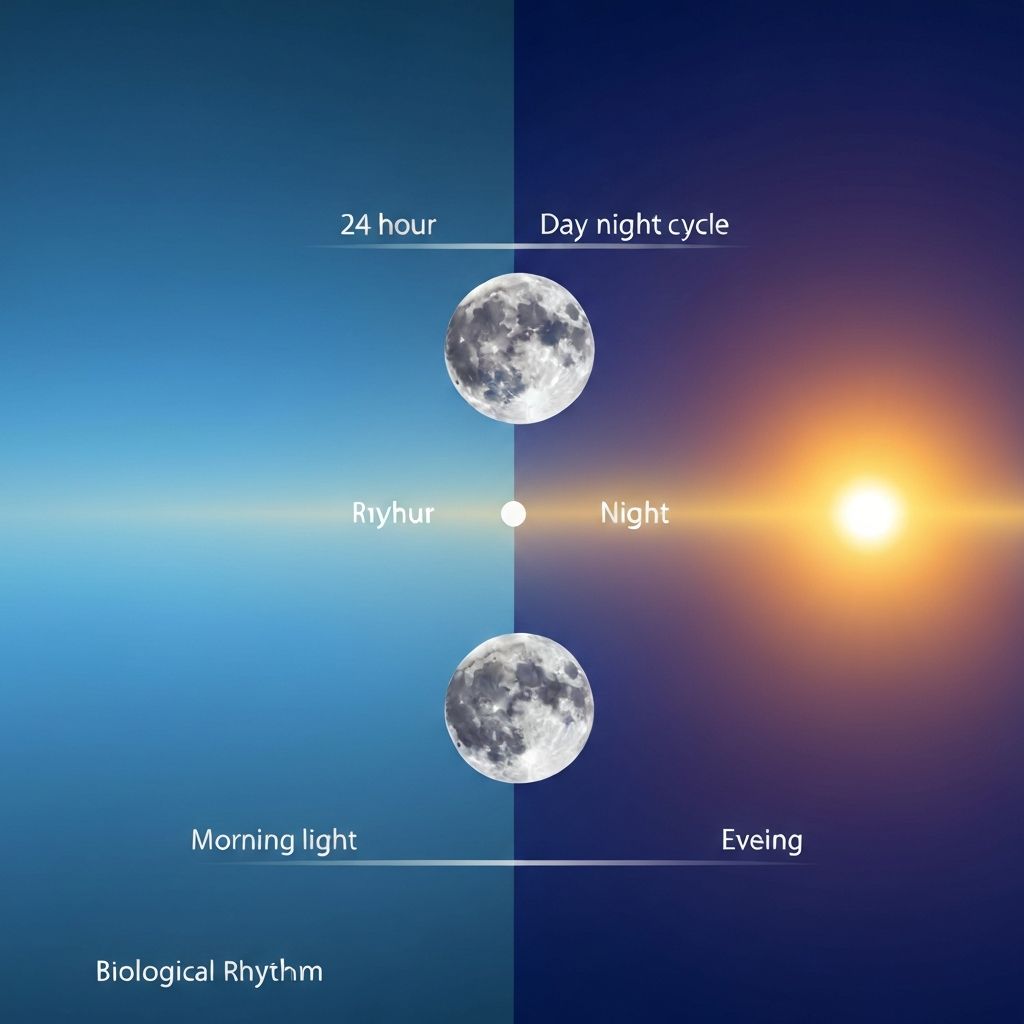
Understanding Circadian Rhythms
Circadian rhythms are biological patterns that repeat approximately every 24 hours, synchronized with the Earth's rotation and the cycle of daylight and darkness. These rhythms are not unique to humans—virtually all living organisms, from bacteria to plants to animals, display circadian patterns. In humans, circadian rhythms regulate numerous physiological processes including hormone production, body temperature, sleep-wake cycles, and metabolic activity.
The term "circadian" comes from Latin roots meaning "approximately" (circa) and "day" (diem). While these rhythms naturally cycle on roughly 24-hour periods, they are not exact—different individuals and tissues show slightly different cycle lengths. Environmental cues, particularly light exposure, synchronize these internal rhythms with actual 24-hour days.
The Central Clock: The Suprachiasmatic Nucleus
The primary biological clock in humans is located in the brain's suprachiasmatic nucleus (SCN), a region containing approximately 20,000 neurons. This region receives direct input from the eyes through the retinohypothalamic tract, allowing it to sense light exposure. When light reaches the eye, specialized photoreceptors (melanopsin-containing cells) transmit signals to the SCN, entraining—or synchronizing—the internal clock to the external light-dark cycle.
Beyond the central SCN clock, numerous peripheral clocks exist throughout the body in tissues including the liver, heart, muscles, and digestive system. These peripheral clocks are regulated by the central SCN but can also respond to other cues such as meal timing and physical activity. This distributed clock system allows coordinated regulation of metabolism and other functions across different body systems.
Hormonal Regulation Throughout the Day
Circadian rhythms profoundly influence hormone production, which directly affects metabolism and energy regulation. Several key hormones show clear circadian patterns:
Cortisol
Cortisol is a glucocorticoid hormone produced by the adrenal glands. In healthy circadian patterns, cortisol concentrations typically rise sharply in early morning (several hours before waking), promoting alertness and energy mobilization. Cortisol levels gradually decline through the day, reaching their lowest point in late evening. This natural rhythm supports morning wakefulness and activity while allowing cortisol to decline during sleep. Disrupted cortisol rhythms are associated with metabolic dysregulation.
Melatonin
Melatonin is produced by the pineal gland and signals "night" throughout the body. Production begins rising in the evening as light exposure decreases, promoting sleepiness and triggering nighttime metabolic shifts. Melatonin levels peak in the middle of the night and decline toward morning. Beyond sleep promotion, melatonin influences metabolism and immune function. Artificial light exposure in the evening can suppress melatonin production, disrupting normal circadian timing.
Insulin
Insulin secretion shows circadian variation, with higher insulin secretion typically occurring in morning and afternoon hours, corresponding with meal timing patterns. Insulin sensitivity—how effectively cells respond to insulin—also varies throughout the day. Glucose tolerance is generally higher in the morning and decreases through the day, suggesting metabolic processes adapt to anticipated feeding patterns.
Metabolic Rate Variations
Metabolic rate (energy expenditure) shows significant circadian variation. In humans with typical activity-sleep patterns, metabolic rate is generally higher during daytime hours and lower during night sleep. Core body temperature, which correlates with metabolic rate, follows a similar pattern—rising during the day and declining at night.
This circadian variation in metabolic rate contributes to the body's adaptation to typical activity patterns. Morning light exposure triggers increased alertness and metabolic activity in anticipation of daytime activity. Evening darkness promotes metabolic shifts toward rest and recovery. Disruptions to light-dark cycles can desynchronize these processes.
Light Exposure and Circadian Synchronization
Light exposure is the most powerful regulator of human circadian rhythms. Bright light exposure, particularly in the morning, advances circadian phase and promotes synchronization with the 24-hour day. Conversely, evening light exposure delays circadian phase. This sensitivity to light timing has important implications for metabolic health.
In traditional environments with abundant natural light exposure during the day and complete darkness at night, circadian rhythms naturally synchronize with the light-dark cycle. In modern environments, artificial light extends evening exposure and may reduce daytime light intensity, potentially disrupting natural circadian synchronization.
Seasonal Variations in Circadian Rhythms
Circadian rhythms also show seasonal variation in response to changing daylight duration. In regions with pronounced seasonal changes, winter brings shorter days and less intense light exposure. This seasonal change influences metabolism, energy levels, and activity patterns. Conversely, summer brings extended daylight and potentially increased metabolic activity.
These seasonal variations may partially explain why traditional populations adopted different eating and activity patterns across seasons. Spring and summer typically brought increased agricultural activity and food availability, while winter was characterized by reduced activity and reliance on stored foods. Modern heated, artificially-lit environments reduce these seasonal influences compared to traditional environments.
Meal Timing and Circadian Metabolic Responses
Beyond light exposure, meal timing influences circadian metabolic processes. The digestive system shows circadian variation in enzyme secretion, hormone production, and digestive capacity. Morning meals eaten after light exposure show different metabolic responses than evening meals eaten before sleep. Some research suggests metabolic efficiency is higher during daylight hours compared to nighttime hours.
Traditional Mediterranean eating patterns structure meals around natural light cycles—a moderate breakfast after sunrise, a substantial midday meal during peak daylight, and a lighter evening meal before sunset. This structure naturally aligns food intake with circadian periods of high metabolic capacity.
Implications and Considerations
Understanding circadian rhythms provides scientific context for how daily rhythms influence metabolism and energy regulation. Circadian desynchrony—misalignment between internal rhythms and external schedules—is associated with various health concerns in populations studied by researchers.
However, individual responses to circadian timing vary significantly based on chronotype (whether individuals are naturally more alert in morning or evening hours), genetics, age, environmental factors, and personal circumstances. This article describes observed biological patterns and general scientific principles without implying specific recommendations for any individual.
Significant changes to sleep, activity, or eating patterns should be considered individually based on personal circumstances and potentially discussed with healthcare providers who understand your individual situation.